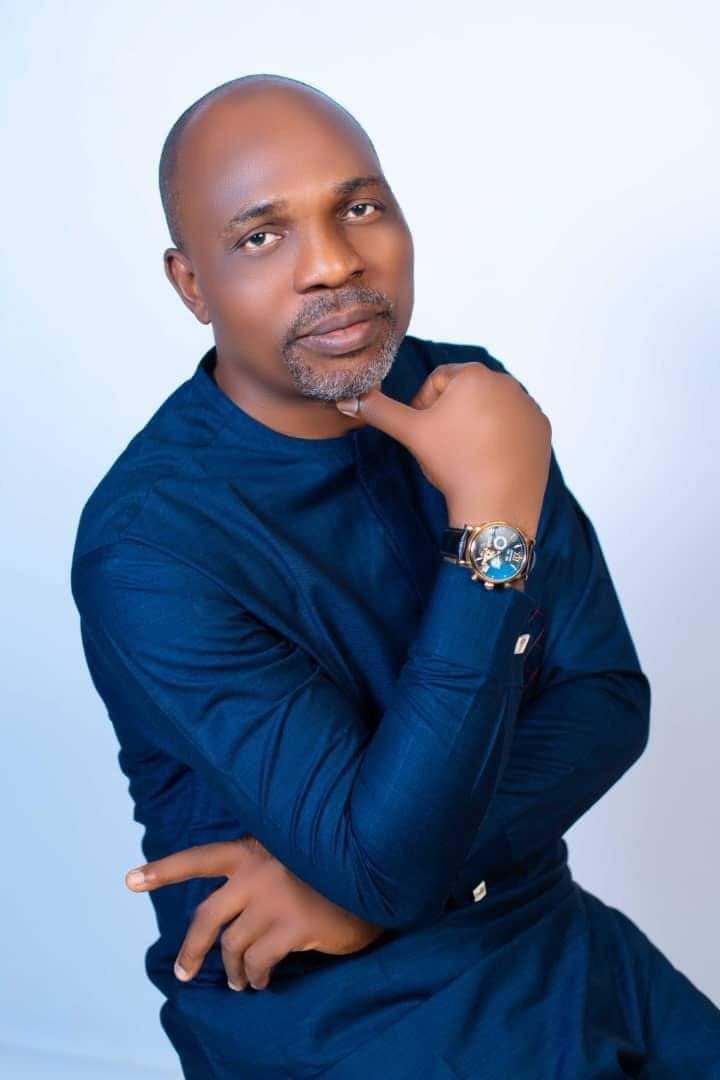


Prof. Ajogbeje warns against grade-driven learning
… advocates shift from examination-centred teaching to learner-focused assessment
By Lai Gidado


Professor O. J. Ajogbeje of Bamidele Olumilua University of Education, Science and Technology, Ikere-Ekiti (BOUESTI), has called for a fundamental shift in Nigeria’s education system from assessment focused mainly on grades and examinations to one that uses feedback to improve learning.
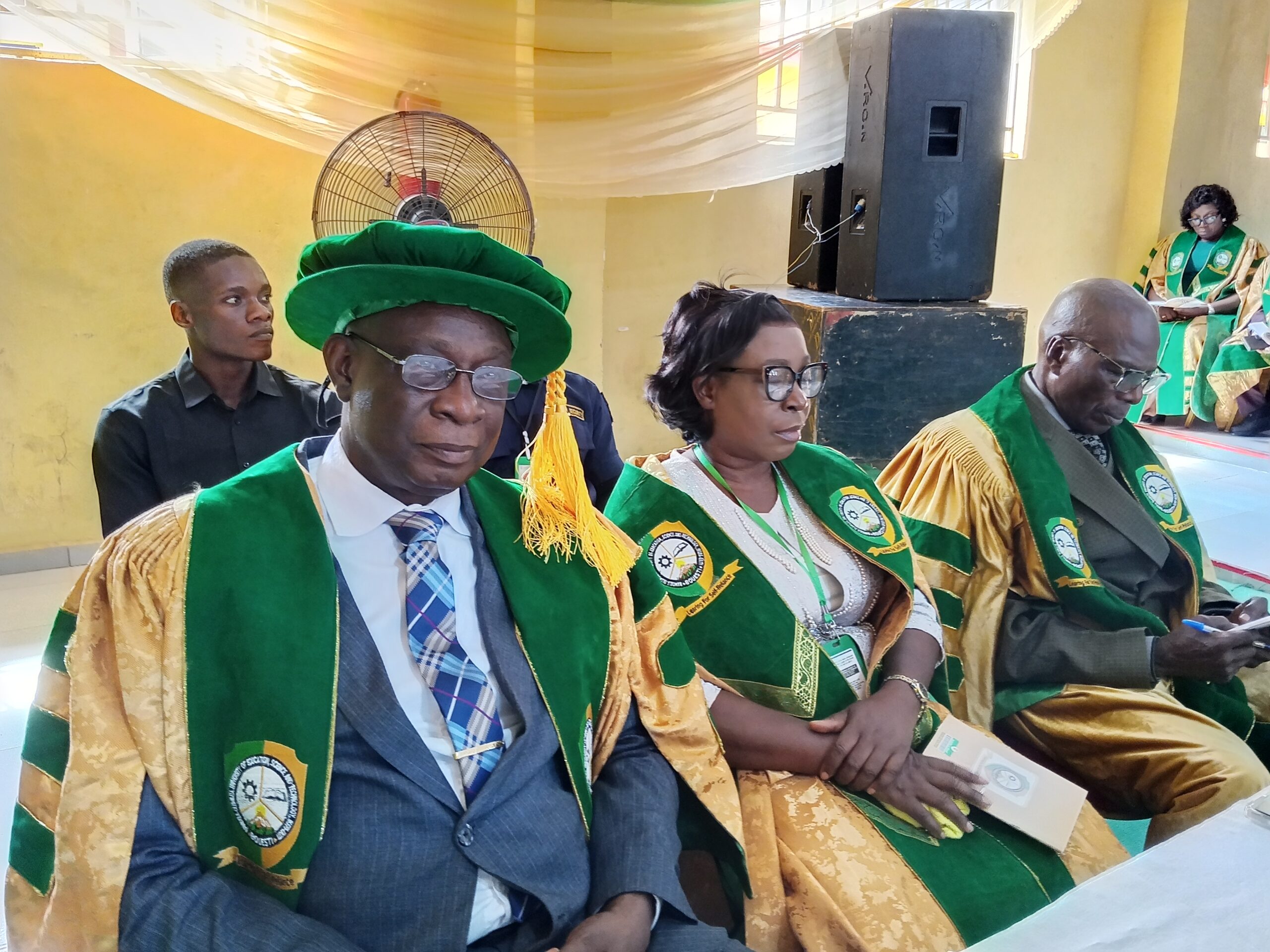
Ajogbeje made the call on Tuesday, September 22, 2026, while delivering the 11th Inaugural Lecture of the university titled, “Formative Assessment and Feedback: Looking Backwards to Move Forward.”
The lecture marked several milestones for the professor, being the first inaugural lecture in Tests and Measurement, the first in the Department of Counselling Psychology and the first in the School of Social Science Education.
He said the lecture was also the sixth inaugural lecture in the College of Education and the first to be delivered by a professor from the Ajogbeje family.
Reflecting on his academic journey, Ajogbeje attributed his achievements to the grace of God, recalling that his career began in 1987 when a childhood friend, J. A. Alabi, drew his attention to a vacancy for Mathematics lecturers at The Polytechnic, Owo, now Rufus Giwa Polytechnic.
Turning to the central theme of his lecture, Ajogbeje said assessment should no longer be regarded principally as a mechanism for grading, ranking and certifying students.

He argued that assessment should provide information capable of guiding teaching, identifying learning gaps, supporting learners and promoting continuous improvement.
According to him, modern education requires a movement from “assessment of learning” to “assessment for learning”, particularly in an era of learner-centred education, competency-based curricula and digital learning.
He defined assessment as the systematic process of collecting, interpreting and using evidence about learners’ knowledge, skills, attitudes and performance to make informed educational decisions.
Ajogbeje identified three fundamental questions that should guide assessment: “Where are learners now? Where do they need to be? How can they be supported to get there?”
He traced the historical development of formative assessment to Michael Scriven’s work in 1967, followed by Benjamin Bloom’s contributions to classroom assessment and later the influential work of Black and Wiliam on formative assessment.
He said contemporary assessment could be understood through three complementary paradigms: assessment of learning, assessment for learning and assessment as learning.
The professor explained that while assessment of learning measures achievement, assessment for learning improves instruction, while assessment as learning develops reflective and autonomous learners.
On feedback, Ajogbeje argued that it should not be reduced to marks, scores or comments written in red ink on students’ scripts.

He said effective feedback should help learners understand the gap between their present performance and the desired learning outcome and provide practical guidance on how to close that gap.
According to him, effective feedback should be timely, specific, balanced, goal-oriented, learner-centred, actionable and culturally sensitive.
He said he encouraged his students to maintain feedback journals and answer three questions after receiving feedback: what they had learnt, what they would change next time and what remained unclear.
Ajogbeje described formative assessment and feedback as closely connected but distinct processes, submitting that “feedback is the engine that drives formative assessment.”

He explained that assessment gathers evidence about learners, while feedback activates that evidence by guiding reflection, improvement and action.
“Assessment provides the evidence; feedback activates the evidence; improvement is the outcome,” he said, adding that teachers must ensure that students actually act on feedback rather than merely receive it.
He stressed that feedback was incomplete unless learners engaged with it, reflected on it, acted upon it and demonstrated measurable improvement.
Using examples from primary, secondary and tertiary education, the professor said teachers should use assessment as an opportunity to correct misconceptions and encourage learners to improve rather than discourage them.
He identified fear of criticism, poor feedback literacy and resistance to revision among major student-related barriers to effective formative assessment.
Ajogbeje also identified heavy workloads, large classes, limited technology, inadequate training and reliance on traditional grading practices as major challenges confronting teachers.
He said some teachers had resorted to brief comments such as “Good”, “Wrong” or “Try again”, which, he argued, often failed to provide learners with sufficient guidance for improvement.
The professor advocated greater use of technology, including online quizzes, learning management systems, computer-based assessments, data analytics and artificial intelligence, while cautioning that technology must complement rather than replace teachers.
He maintained that empathy, professional judgment, encouragement and human relationships remained essential components of effective teaching.
Ajogbeje said low-cost approaches could also reduce teachers’ workload, citing structured paper-based feedback templates, colour-coded rubrics, standardised comment banks, whole-class error analysis, peer-assessment guides, exemplar modelling and audio feedback through mobile phones.
He presented his research contributions in four broad areas: improving classroom learning through formative assessment, feedback and remediation, predicting students’ achievement, and technology-enhanced assessment.
He cited studies involving students and teachers in Ondo and Ekiti states which, according to him, demonstrated the value of formative testing, feedback and remediation in improving learning outcomes.
The professor said his research also showed that in-course formative assessment could provide useful information for predicting academic achievement, while highlighting shortcomings in teachers’ test-construction skills.
On the way forward, Ajogbeje called for strengthened formative assessment across all levels of education and continuous professional development for teachers in assessment and feedback.
He also advocated greater feedback literacy among teachers and students, appropriate integration of educational technology, routine use of self- and peer-assessment and institutional policies recognising feedback as fundamental to effective teaching.
He urged policymakers to fund teacher assessment training and develop indicators that measure feedback quality rather than focusing exclusively on enrolment figures and examination scores.
Ajogbeje further called on curriculum planners to embed formative checkpoints in schemes of work and urged school administrators to provide teachers with adequate time for feedback conferences, script reviews and assessment design.
He advised classroom teachers to make feedback clear, kind, forward-focused and evidence-based, while encouraging students to seek feedback, ask questions and turn criticism into opportunities for improvement.
Reflecting on his own teaching career, the professor said his early feedback practices were characterised by red ink and vague comments such as “Good effort” and “Try harder next time.”
He said experience had taught him to focus less on what students had done wrong and more on what they needed to do next.
In his closing remarks, Ajogbeje said feedback should be regarded not as the end of teaching but as “the most important beginning of teaching.”
He called for classrooms where feedback would be welcomed, understood, applied and used to promote excellence, equity and human-centred learning.
The professor concluded the lecture by expressing gratitude to God, his late parents, wife, children, mentors, teachers, colleagues, students, friends and others who contributed to his academic journey.

He particularly acknowledged his mother, who he said sold akara and moinmoin to fund his education, as well as his wife, Mrs. Omowumi Funmilayo Ajogbeje, whom he credited with encouraging him to return to complete his PhD after his traumatic experience in 2003.
He also expressed appreciation to Pastor D. O. Akingbohungbe and the Deeper Life Bible Church family for their role in rescuing him during the 2003 attack, as well as other individuals and institutional leaders who supported his career.
Ajogbeje ended the lecture by inviting the audience to join him in singing “My Father, How Can I Explain?” by Adeyinka Alaseyori, while thanking the university community and guests for listening.