

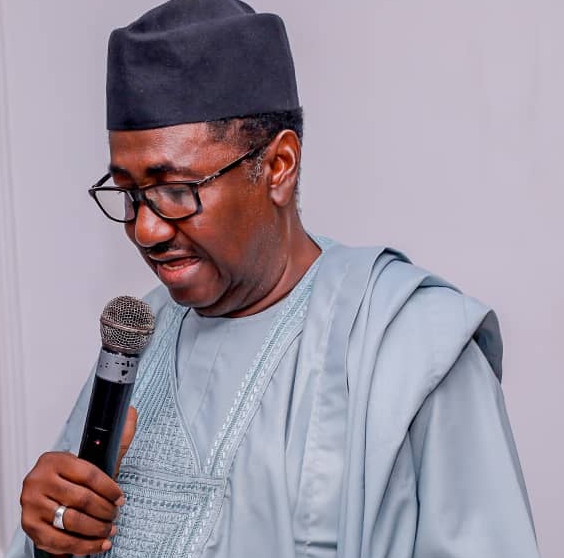
Nigeria’s diplomatic influence under threat, Ex-Diplomat, Ilyasu warns
…calls for urgent foreign policy reforms, stronger ECOWAS ties, others
By Lai Gidado

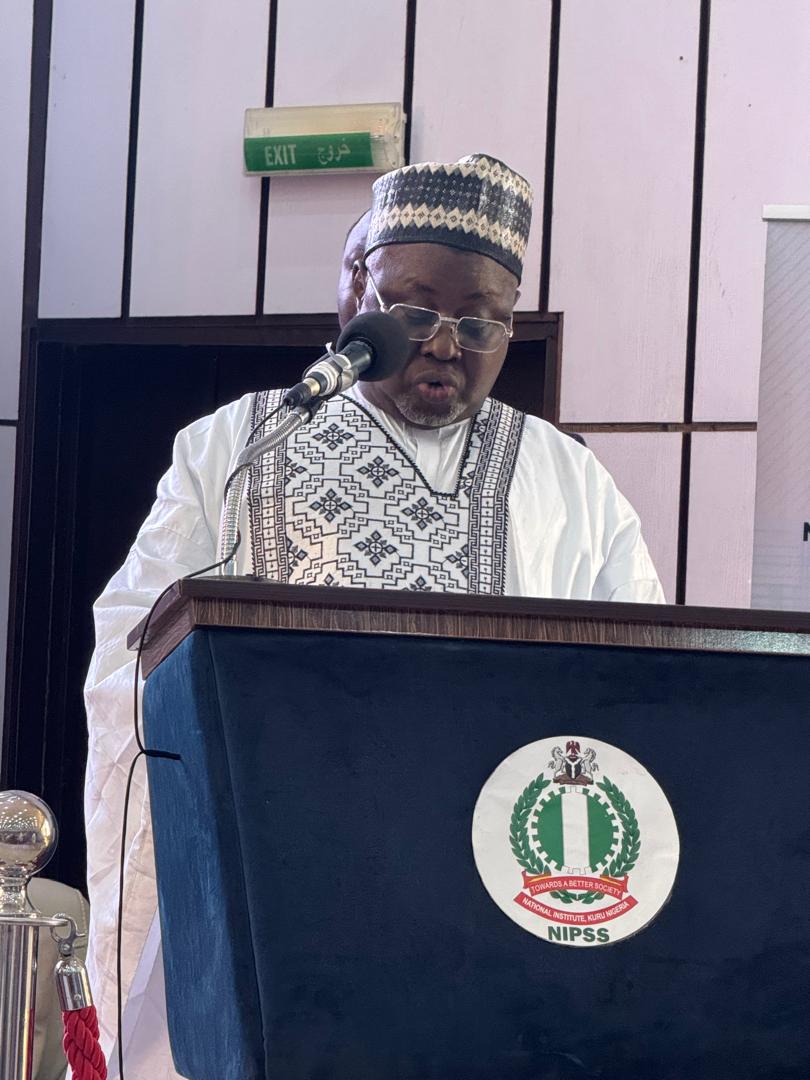
A former Nigerian diplomat, Mohammed Kabir Ilyasu, has called for a comprehensive repositioning of the country’s foreign policy to reflect changing global realities, strengthen regional cooperation and restore Nigeria’s influence in international affairs.
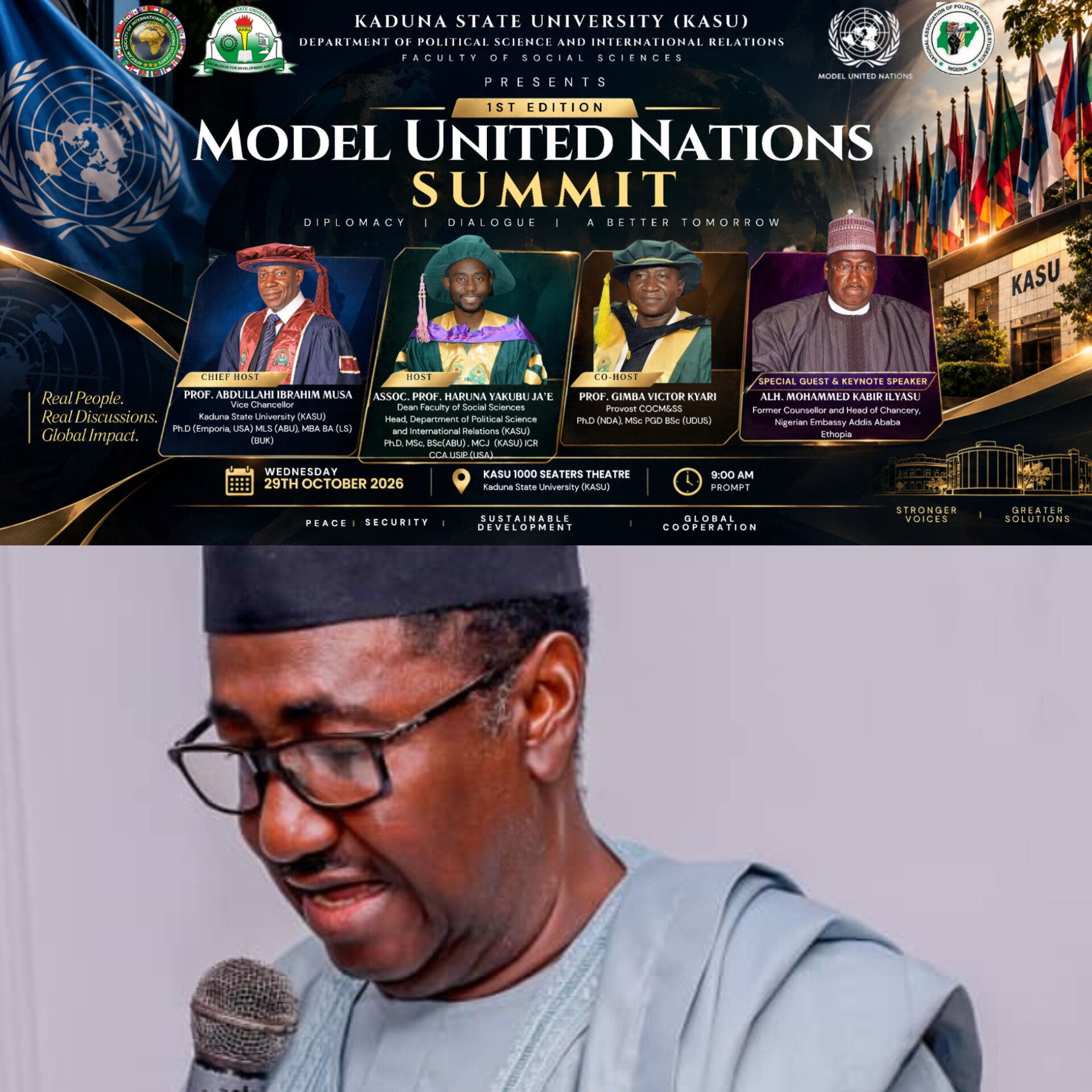
Ilyasu, who made the call while delivering a paper titled “My Orientation and Experiences as a Diplomat,” at Kaduna State University, said Nigeria must move beyond the diplomatic strategies of the past and develop practical approaches capable of addressing emerging political, economic and security challenges.
He presented the paper at the First edition of the Model United Nations Summit, held at at the Kaduna State University (KASU), on Wednesday 29th October, 2026.
Ilyasu observed that Nigeria’s diplomatic influence, particularly in Africa and the West African sub-region, had weakened over the years, warning that the country’s declining economic strength, growing regional divisions and increasing migration of its citizens were signs that its foreign policy required urgent reassessment.
According to him, Nigeria must adapt its diplomacy to a rapidly changing international environment dominated by major powers, emerging alliances, ideological disagreements, insecurity, poverty and competing national interests.
Reflecting on the evolution of the Nigerian Foreign Service, Ilyasu recalled that officers of his generation received their initial orientation at the Nigerian Institute of International Affairs (NIIA), where serving career and foreign diplomats trained them for six weeks on the operations and responsibilities of Nigerian diplomatic missions abroad.

He explained that the expansion of the Foreign Service subsequently informed the establishment of the Foreign Service Academy in 1982, following an Order-in-Council, to provide specialised training for officers across different cadres.
He credited the initiative to the then Minister of External Affairs, Professor Ishaya Audu, adding that the administration of Professor Bolaji Akinyemi between 1985 and 1987 further encouraged newly recruited officers to undertake postgraduate programmes in Nigerian universities as part of efforts to strengthen their professional competence.
The former diplomat noted that the training equipped officers with the knowledge and skills required to represent Nigeria effectively in foreign countries and understand the complexities of international relations.
On Nigeria’s traditional foreign policy orientation, Ilyasu recalled that Africa remained the centrepiece of the country’s diplomatic engagements, particularly during the struggles against colonialism, racial discrimination and apartheid in Southern Africa.
He said Nigeria played significant roles in supporting liberation movements across Angola, Mozambique, Zimbabwe, Namibia, Guinea-Bissau, the Saharawi Arab Democratic Republic and South Africa.
According to him, Nigeria’s commitment to African liberation was demonstrated through its diplomatic, political and material support for independence movements, as well as its participation in peace settlements and international negotiations.
He identified Nigeria’s involvement in the independence of Angola, Mozambique and Zimbabwe, the liberation of Namibia and the eventual dismantling of apartheid in South Africa as major achievements that strengthened the country’s international standing.
Ilyasu also recalled Nigeria’s contributions to peacekeeping operations in the Democratic Republic of Congo, Lebanon, Liberia, Sierra Leone and Sudan, as well as its participation in international efforts to resolve conflicts in different parts of the world.
He said the country also played an influential role in shaping the Organisation of African Unity, now the African Union, the United Nations, the Commonwealth and the Economic Community of West African States (ECOWAS).
He further highlighted Nigeria’s contributions to the establishment of ECOWAS and the independence of Guinea-Bissau, particularly through its involvement in the African Liberation Committee.
However, he lamented that the diplomatic environment that once gave Nigeria considerable influence in Africa had changed considerably.
According to him, the country’s traditional regional relationships have been weakened by political developments, particularly the withdrawal of Mali, Niger and Burkina Faso from ECOWAS and their subsequent decision to establish the Alliance of Sahel States.
He also expressed concern over Nigeria’s diminishing economic competitiveness, noting that countries such as Ghana, South Africa, Botswana, Egypt and Kenya were increasingly challenging its traditional economic standing on the continent.
The diplomat observed that the increasing migration of young Nigerians to other countries, popularly described as ‘Japa’, was another indication of the country’s socioeconomic challenges and the need to reconsider its international engagement.
He maintained that Nigeria must reconcile its national interests with its obligations under regional and international agreements, particularly within ECOWAS.
Ilyasu argued that foreign policy decisions must not be driven exclusively by immediate political or strategic advantages at the expense of the country’s long-term credibility, treaty commitments and international relationships.
He stressed that the apparent contradictions between national interests and regional obligations must be addressed through responsible leadership, diplomatic engagement and reasonable statesmanship.
On the importance of professional diplomacy, he explained that the Vienna Convention on Diplomatic Relations of 1961 and the Vienna Convention on Consular Relations of 1963 established different legal frameworks for diplomatic and consular officers.
He noted that although members of diplomatic missions are generally regarded by ordinary citizens as diplomats, there are important distinctions in their functions, privileges and immunities under international law.
According to him, diplomatic agents enjoy broader protection under the Vienna Convention on Diplomatic Relations, including personal inviolability and immunity from the criminal jurisdiction of the receiving state, subject to the provisions of the convention.
He explained that consular officers, on the other hand, enjoy functional immunity for acts performed in the exercise of their official duties, with more limited protection against arrest and detention.
Speaking on the responsibilities of ambassadors and high commissioners, Ilyasu said their duties extend far beyond ceremonial functions and the presentation of letters of credence to heads of state in their host countries.
He identified the principal responsibilities of an ambassador as representing the authority and interests of the sending government, protecting and advancing national interests through lawful diplomatic engagements, and providing the home government with reliable information, intelligence and policy advice.
He added that ambassadors were also responsible for political representation, strategic analysis, negotiations, economic promotion, citizen protection and the effective administration of diplomatic missions.
The former diplomat regretted that many Nigerians had limited understanding of the responsibilities of ambassadors, with some perceiving them mainly as officials expected to organise expensive parties, assist citizens arrested abroad, facilitate passport renewals or provide accommodation and other courtesies to visiting politicians.
He explained that although some consular responsibilities fall within the broader operations of foreign missions, the central responsibility of an ambassador is to advance Nigeria’s national interests and maintain effective relations with the receiving country.
Ilyasu further stressed that the success of diplomacy depended largely on understanding where political and administrative authority resided, noting that a foreign ministry could not effectively implement a coherent diplomatic strategy when major decisions affecting international relations were taken without adequate professional consultation and coordination.
He said the working environment of diplomats also differed considerably from one country to another, depending on the nature of bilateral relations.
While diplomatic assignments in friendly countries might be relatively easier, he noted that officers posted to hostile or unfriendly countries often faced surveillance, isolation, misinformation, hostile media campaigns and deliberate obstruction of their official responsibilities.
Despite the challenges, he described diplomacy as a rewarding profession that demands patience, courage, discipline, tact and the ability to maintain professional relationships under difficult circumstances.
On the role of international organisations, Ilyasu expressed reservations about the effectiveness of the United Nations, arguing that the organisation’s ability to resolve major international disputes was often constrained by the competing interests of its member states and the veto powers enjoyed by the five permanent members of the Security Council.
He observed that disagreements among powerful nations had frequently undermined collective action, particularly on issues relating to war, peace and international security.
He also questioned the effectiveness of some United Nations resolutions, particularly those concerning the Arab-Israeli conflict, when the organisation lacked the necessary political consensus and enforcement support to secure compliance.
Nevertheless, he acknowledged the importance of the United Nations and its specialised agencies in providing platforms for international consultation, cooperation and conflict resolution.
He called for greater attention to regional organisations, particularly the African Union and ECOWAS, arguing that regional stability and economic integration should remain central to Nigeria’s foreign policy objectives.
According to him, the economic integration envisaged under the Abuja Treaty establishing the African Economic Community should be complemented by financial and political integration to achieve meaningful continental development.
He warned that diplomats must also adapt to emerging realities in which international relations increasingly involve specialists in economics, security, technology, trade and other strategic sectors.
He said diplomats who failed to acquire the necessary expertise risked becoming little more than ceremonial officials or intermediaries for professionals outside the traditional diplomatic service.
Ilyasu also emphasised the importance of honesty, confidence and mutual respect in international relations, recalling the observation attributed to Sir Edward Grey that the aim of diplomacy was to enlarge the area of confidence.
He maintained that although absolute transparency might not always be possible in international negotiations, governments and their representatives should strive to be as honest and frank as circumstances permit.
Reflecting on the Nigerian Civil War between 1967 and 1970, he cited the experiences of eminent Nigerians, including Chief Emeka Anyaoku and Godwin Alaoma Onyegbula, in illustrating the difficult questions of conscience, allegiance and national loyalty that confront individuals during periods of political upheaval.
He said courage remained an essential quality for institutional transformation and the resolution of complex national and international challenges.
The paper also examined Ilyasu’s diplomatic experiences in negotiations concerning the security of the Lake Chad Basin.
He recalled that the Lake Chad Basin Commission, comprising Nigeria, Niger, Chad and Cameroon, later admitted the Central African Republic in 1994 as part of efforts to address the challenges associated with the recession of Lake Chad.
According to him, the shrinking lake had resulted in population movements, increased insecurity and cross-border criminal activities, necessitating cooperation among member states.
He explained that negotiations were undertaken to establish a military arrangement, including an airborne unit, with a mandate to pursue criminals and bandits across borders under agreed regional arrangements.
He said discussions also examined possible water-management interventions, including the diversion of water from major tributaries, to address the declining water levels of Lake Chad and protect communities dependent on the lake.
Ilyasu identified the discovery of oil in the region and the resulting strategic interests of member states as factors that complicated negotiations, particularly against the background of the Bakassi dispute between Nigeria and Cameroon.
He, however, acknowledged the intervention of the late Chadian President, Idriss Déby, in helping to ease tensions and facilitate discussions.
Another experience he shared concerned his involvement in efforts to address the situation of Nigerian refugees displaced by the conflict between Ethiopia and Eritrea.
He explained that, following an invitation from the United Nations High Commissioner for Refugees, he visited affected border communities to investigate the circumstances of Nigerians who claimed to have been denied recognition by Eritrean authorities despite participating in the referendum that led to Eritrea’s independence.
He said investigations revealed that many of the affected individuals were originally from Kasala, a major Nigerian settlement in Sudan, and were predominantly Hausa-speaking.
He recalled that the absence of Hausa among the languages recognised in Eritrea’s 1997 Constitution had contributed to difficulties in establishing their identity and status.
The former diplomat said efforts were made to appeal to the affected Nigerians to cooperate with Eritrean and Ethiopian authorities, as well as the UNHCR, towards an amicable resolution of their situation.
On Nigeria’s foreign policy objectives, Ilyasu highlighted the contributions of former Ministers of External Affairs, particularly Professor Ibrahim Gambari and Professor Bolaji Akinyemi.
He recalled Gambari’s concentric circle approach to foreign policy, which emphasised Nigeria’s immediate neighbours, West Africa, the African continent and the wider international community as successive levels of priority in the country’s external relations.
He also highlighted Akinyemi’s diplomatic initiatives, including the Technical Aid Corps and the proposed Concert of Medium Powers, as important instruments for expanding Nigeria’s international influence.
According to him, the Technical Aid Corps was conceived to enable Nigeria to share its skilled manpower with developing countries in Africa, the Caribbean and the Pacific, rather than relying primarily on direct financial assistance.
He explained that the programme provided opportunities for Nigerian professionals to contribute their expertise to the development of recipient countries, while simultaneously advancing Nigeria’s diplomatic and foreign policy interests.
He described technical assistance as an important instrument of foreign policy, stressing that it should serve the interests of both donor and recipient countries.
On the Concert of Medium Powers initiative, Ilyasu said Akinyemi believed that countries did not necessarily have to be superpowers to influence global affairs.
He explained that countries with intermediate economic, political and diplomatic strength could combine their influence to mediate international disputes, promote peace and stability, and provide a counterbalance to the dominance of major powers.
He said the initiative remained relevant in a world where emerging alliances and medium-sized economies were increasingly asserting their interests.
The former diplomat therefore urged Nigeria to revive strategic thinking, strengthen its diplomatic institutions and develop foreign policy initiatives capable of responding to future challenges rather than relying on sentimental recollections of its past international achievements.
He insisted that foreign policy must be based on an objective assessment of global political, military and economic realities and supported by the country’s actual economic and military capabilities.
He also called for greater involvement of the National Assembly and other relevant stakeholders in shaping and sustaining foreign policy decisions, warning against allowing domestic political struggles to distort the country’s international engagements.
Ilyasu maintained that no foreign policy issue should be considered in isolation, as decisions taken in one area could have far-reaching consequences for Nigeria’s relationships and interests elsewhere.
He concluded that although the principles guiding diplomacy remained largely unchanged, the conditions under which diplomats operated had evolved significantly over the decades.

Describing his presentation as a reflection of personal experiences and professional observations rather than an official government position or a conventional diplomatic memoir, he said his intention was to provide useful insights into the changing nature of diplomacy and the responsibilities of Nigeria’s Foreign Service.
He also paid tribute to the wives of diplomats, acknowledging their sacrifices, resilience and contributions to the success of their spouses’ careers, particularly the challenges associated with frequent international postings and family dislocation.
Ilyasu concluded with a strong reminder that diplomacy remained an indispensable instrument of national security and sovereignty, declaring that “Diplomacy is always the first shield of our sovereign defence.”