


After Abuja: Why Nigeria’s Governors Must Do More
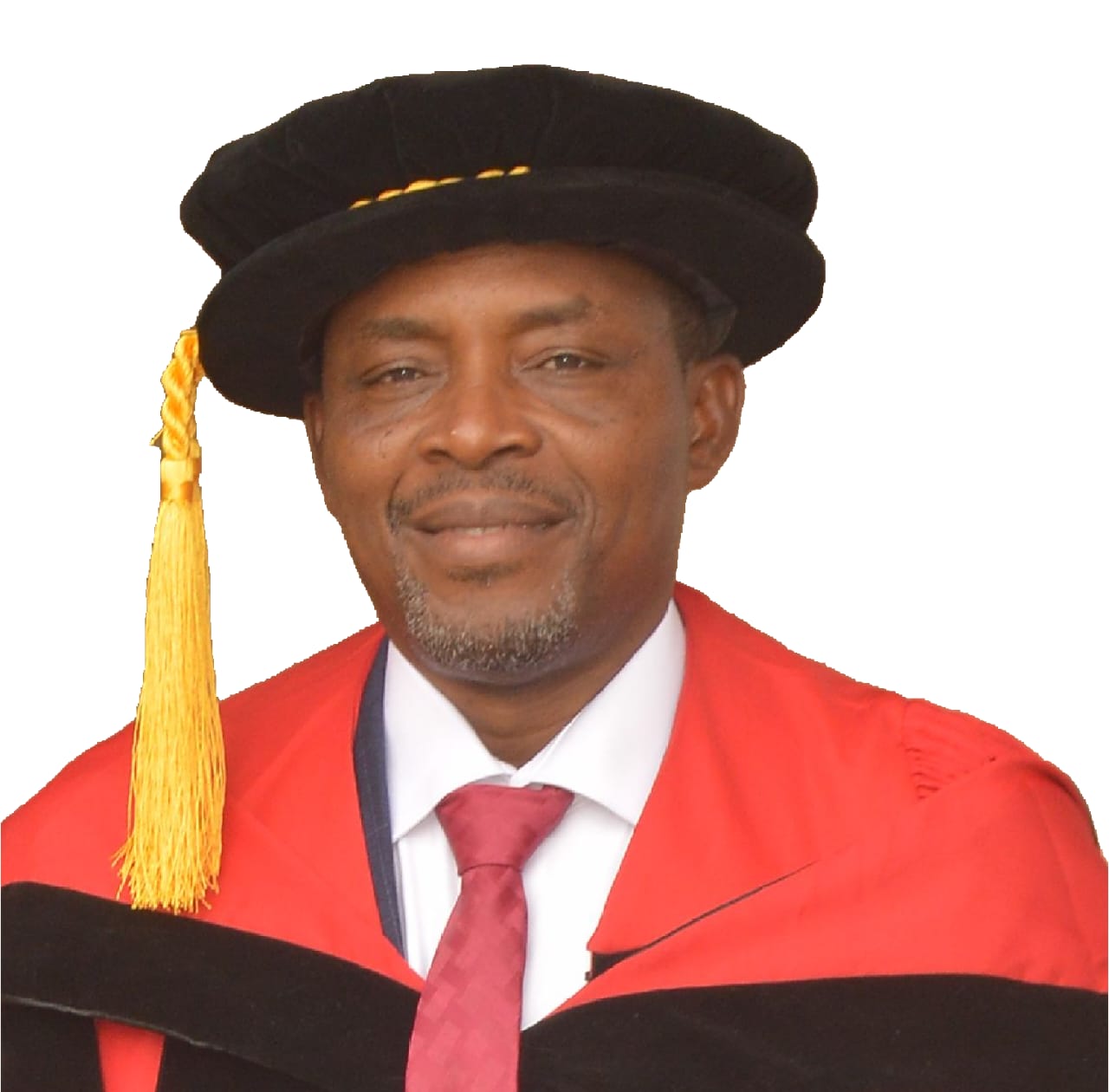
By Akeem Bello
For years, Nigerians have looked to Abuja whenever the country’s problems become unbearable. Fuel prices rise, food becomes expensive, schools deteriorate, hospitals struggle and infrastructure fails, and the Federal Government becomes the principal target of public anger. But Nigerians must begin to examine another level of government more closely: their state governments.
This is not an argument for absolving Abuja. It is an argument for taking federalism seriously, and ending the convenient fiction that governors are powerless spectators in Nigeria’s crises.
Nigeria’s states have gained considerably more fiscal space since the removal of the fuel subsidy. According to BudgIT, the combined revenue of 35 states rose from ₦8.66 trillion in 2023 to ₦17.17 trillion in 2024, an increase of 98.26 per cent. Gross FAAC allocations accounted for 66 per cent of that increase.
This raises an unavoidable question: what are Nigerians getting in return?
The answer cannot simply be more roads, flyovers, government buildings and ceremonial projects. Development is measured by what public spending changes in people’s lives.
There have also been allegations in some states that the costs of public contracts may have been inflated. Such claims deserve transparent investigation, especially where projects consume substantial public resources. Until the facts are established, however, allegations should remain allegations rather than being treated as proven wrongdoing.
Consider agriculture. At a time when Nigerians are struggling with food prices, states should not view agriculture merely as distributing fertiliser, seedlings or farm equipment. They should build agricultural systems that connect farmers to extension services, irrigation, storage, processing, markets and rural infrastructure. The Federal Government’s food-security strategy itself recognises the importance of state and local implementation.
The same principle applies to roads. A road should not be judged by the size of its contract or the ceremony held when it is commissioned. Its real value lies in whether it reduces transport costs, connects farmers to markets, improves access to hospitals and schools, and stimulates economic activity. Too often, Nigerians see roads deteriorate soon after the administration that constructed them leaves office. Public infrastructure should not have the political lifespan of the governor who commissioned it. A road built with public money should stand the test of time.
Education presents an even more urgent test. UNICEF estimates that about 10.5 million Nigerian children aged 5–14 are out of school. It is a fact that children who are not educated today will become part of tomorrow’s crisis. BudgIT found that states budgeted ₦2.41 trillion for education in 2024 but spent only ₦1.61 trillion, representing 66.9 per cent implementation.
The physical condition of many public primary schools makes the problem even more disturbing. Across the country, children still learn in dilapidated, overcrowded and sometimes barely habitable classrooms. This is despite substantial Federal Government intervention through the Universal Basic Education Commission (UBEC). Under the UBE framework, implementation rests largely with state governments, while federal intervention funds support states in areas including classroom construction and renovation, furniture, water, sanitation, laboratories, libraries and other basic education facilities. States accessing the core matching grant are also required to provide counterpart funding.
The question, therefore, is not simply how much Abuja is spending on basic education. It is what happens to those interventions when they reach the states. Why should a child still sit in an unsafe or unsuitable classroom when federal resources and state counterpart funds have been provided for basic education? States must be judged not by the number of schools they commission but by whether children are entering safe classrooms, learning, completing school and acquiring skills that can support their futures.
They can also do more to complement federal initiatives. NELFUND and the Federal Government’s technical and vocational education programmes demonstrate what national intervention can accomplish. Why should states merely watch? Each state could develop a technical education fund to finance apprenticeships and skills in agriculture, construction, automobile technology, digital services, renewable energy and other sectors demanded by its economy.
Healthcare provides another sobering measure. States budgeted ₦1.32 trillion for health in 2024 but spent ₦816.64 billion, only 61.9 per cent of the budgeted amount. BudgIT also found major gaps in primary healthcare facilities, including staffing, electricity, water supply and emergency services.
These failures matter because people experience healthcare locally. For the pregnant woman in a rural community or the family rushing a sick child to a clinic, governance quality is not an abstract constitutional question. It is whether the facility works when it is needed.
Yet this should not indict every governor. States operate under different fiscal and institutional conditions, and some have demonstrated that better performance is possible. BudgIT’s comparative data show substantial differences in fiscal performance, expenditure and sectoral implementation across states. The problem, therefore, is not that states cannot perform. It is that good performance remains too uneven and too dependent on the priorities of individual administrations.
There is an even deeper contradiction. Governors demand greater fiscal responsibility and policy space from Abuja, but many continue to exercise excessive influence over local governments. The Supreme Court’s 2024 judgment reaffirmed the constitutional status and financial autonomy of elected local councils. Yet two years later, implementation remains contested. The PUNCH reported that local governments received ₦10.48 trillion between July 2024 and June 2026, amid continuing disputes over control of their finances.
A governor cannot demand greater responsibility from Abuja while denying meaningful responsibility to the government closest to the citizen.
This is where Nigeria’s democratic institutions must become more assertive. State Houses of Assembly should scrutinise budgets, borrowing and expenditure rather than merely endorse executive proposals. Civil society should produce independent state-performance scorecards and investigate allegations of contract inflation without prejudging the outcome. Labour unions should broaden their demands beyond wages to include education, healthcare, infrastructure and social protection. The judiciary must enforce constitutional boundaries. Citizens must also ask harder questions: What was budgeted? What was spent? What was delivered? What changed?
Nigeria does not need 36 governors competing merely to announce the biggest projects. It needs governors who understand that public office is an obligation to create measurable improvements in people’s lives.
The Federal Government has responsibilities. So do the states. After Abuja, Nigerians must begin asking their governors a simple but consequential question:
With all these resources and responsibilities, what exactly are you doing to make our lives better?

Akeem Bello, PhD writes from BOUESTI and lives in Ado-Ekiti, Ekiti State